

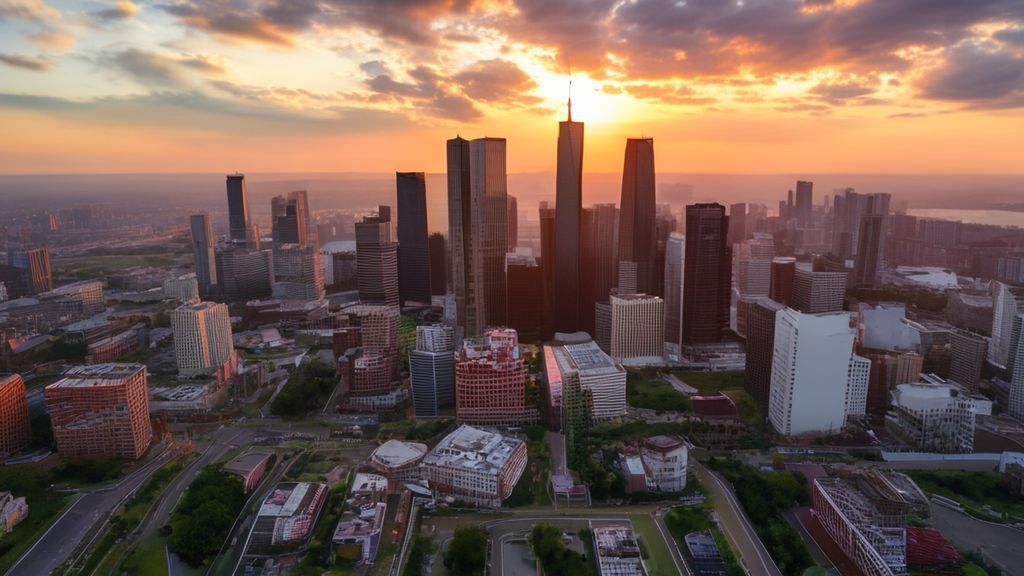
New Delhi: Union Budget 2026-27: Focus on developing economic regions in tier-2, tier-3 cities
Union finance minister Nirmala Sitharaman on Sunday announced a ₹5,000 crore fund to develop city economic regions (CERs) in tier-2 and tier-3 cities and temple towns, alongside the commissioning of seven high-speed intercity rail corridors as “growth connectors.”
Delivering her ninth budget speech for 2026-27, Sitharaman identified the development of CERs and infrastructure as one of six priority areas of intervention. The urban push includes a ₹100 crore incentive for municipal bonds issued over ₹1,000 crore and the high-speed intercity rail networks that will link Mumbai-Pune, Pune-Hyderabad, Hyderabad-Bengaluru, Hyderabad-Chennai, Chennai-Bengaluru, Delhi-Varanasi, and Varanasi-Siliguri.
Sitharaman identified the development of CERs and infrastructure as one of six priority intervention areas. The seven proposed CERs are Bengaluru, the Bhubaneswar-Puri-Cuttack tricities, Coimbatore-Erode-Tiruppur, Pune, Surat, Varanasi, and Visakhapatnam.
“We shall now focus on tier-2, tier-3 cities and even temple towns which need modern infrastructure and basic amenities,” the finance minister said. “This budget aims to further amplify the potential of cities to deliver the economic power of agglomerations by mapping city economic regions based on their specific growth drivers. An allocation of ₹5,000 crore per CER over five years is proposed for implementing their plans through a challenge mode with a reform-cum-result-based financing mechanism.”
The total allocation for the ministry of housing and urban affairs stands at ₹85,522.39 crore for 2026-27. While this marks a 50% increase from the 2025-26 revised estimate of ₹57,203.78 crore, it represents an 11.63% decline from the previous year’s budget estimate of ₹96,777 crore.
Jaya Dhindaw, executive programme director of Sustainable Cities and director of the WRI India Ross Centre, stated that recognising city regions as growth hubs is a necessary step, but warned of implementation risks. “Without clear institutional ownership, dedicated funding streams, and a planning authority that operates beyond municipal boundaries, they risk remaining little more than cartographic exercises,” Dhindaw said.
She said operationalising economic regions requires treating clusters of cities and towns as a single, networked economic unit.
“This means aligning transport, land use, skills development, and municipal finance so that planned growth is deliberately steered into peripheral and shadow areas, rather than passively absorbed by the metropolitan core. Low-carbon, climate-resilient infrastructure and equity must be foundational principles of such clustered growth- not downstream add-ons- if these regions are to be both economically productive and socially sustainable.”
The budget also introduced an infrastructure risk guarantee fund and a dedicated REIT (Real Estate Investment Trust) for asset recycling within central public sector enterprises. “To strengthen the confidence of private developers regarding risks during the infrastructure development and construction phase, I propose to set up an infrastructure risk guarantee fund to provide prudentially calibrated partial credit guarantee to lenders,” Sitharaman stated.
Regarding municipal finance, the finance minister confirmed that existing AMRUT (Atal Mission for Rejuvenation and Urban Transformation) incentives for bond sizes exceeding ₹200 crore will continue.
Prabhat Kumar, director of public finance management at Janaagraha, noted that the ₹100 crore incentive for issuances exceeding ₹1,000 crore would encourage larger ticket sizes. However, he described the year-on-year reduction in total allocation as a “concern” given the pace of India’s urbanisation.
Several landmark projects from the 2025-26 budget remain non-starters, including the ₹1 lakh crore Urban Challenge Fund. Implementation reports indicate a Draft Cabinet Note (DCN) is currently being prepared. Other delayed initiatives include the industrial housing scheme, the urban livelihoods mission, and the SWAMIH 2.0 fund—a special window for affordable and mid-income housing—targeted at completing 100,000 stalled units.
Source: Read full coverage


Been having some fun on betvnd9 lately. It’s worth a look if you want some fresh options. See for yourself: betvnd9